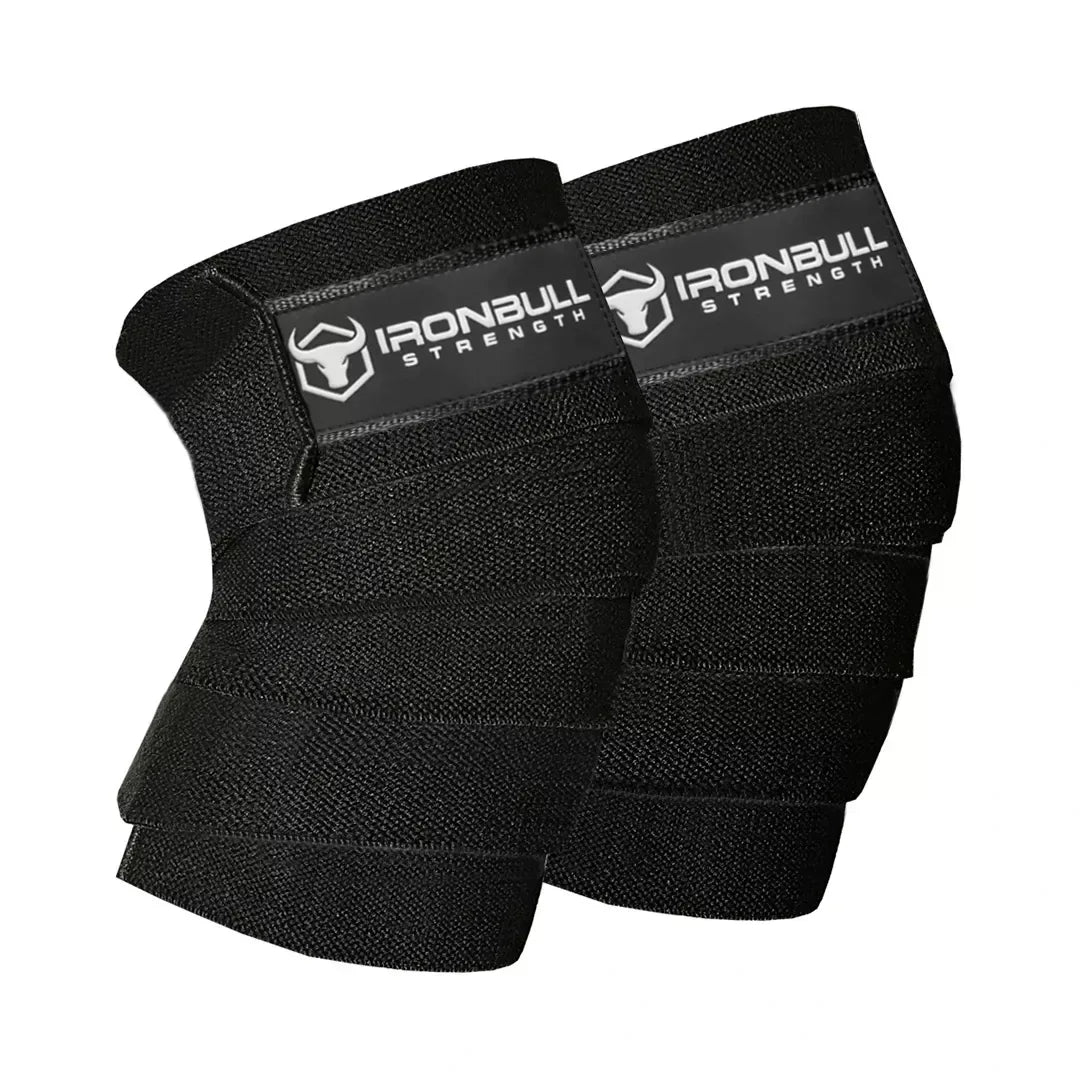
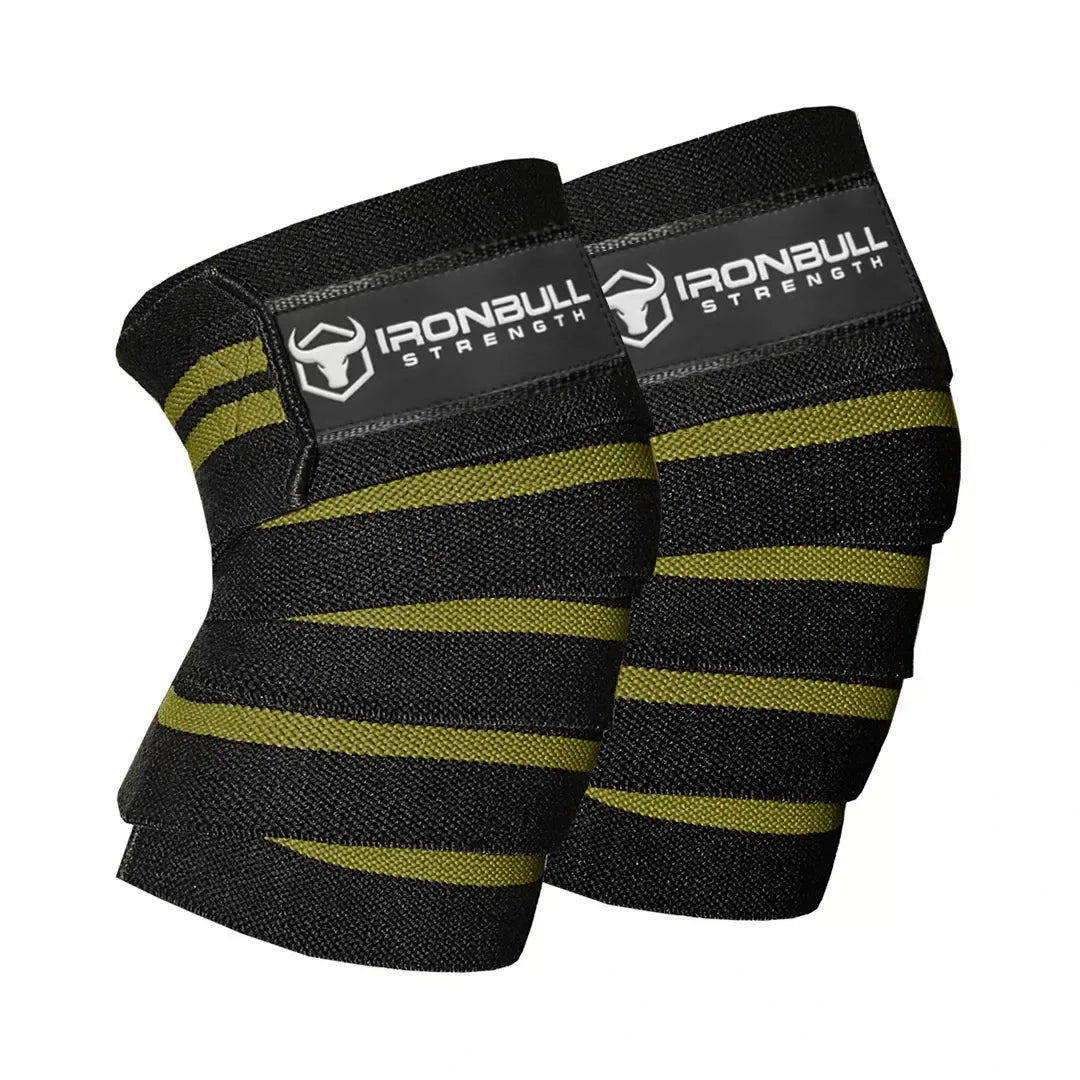
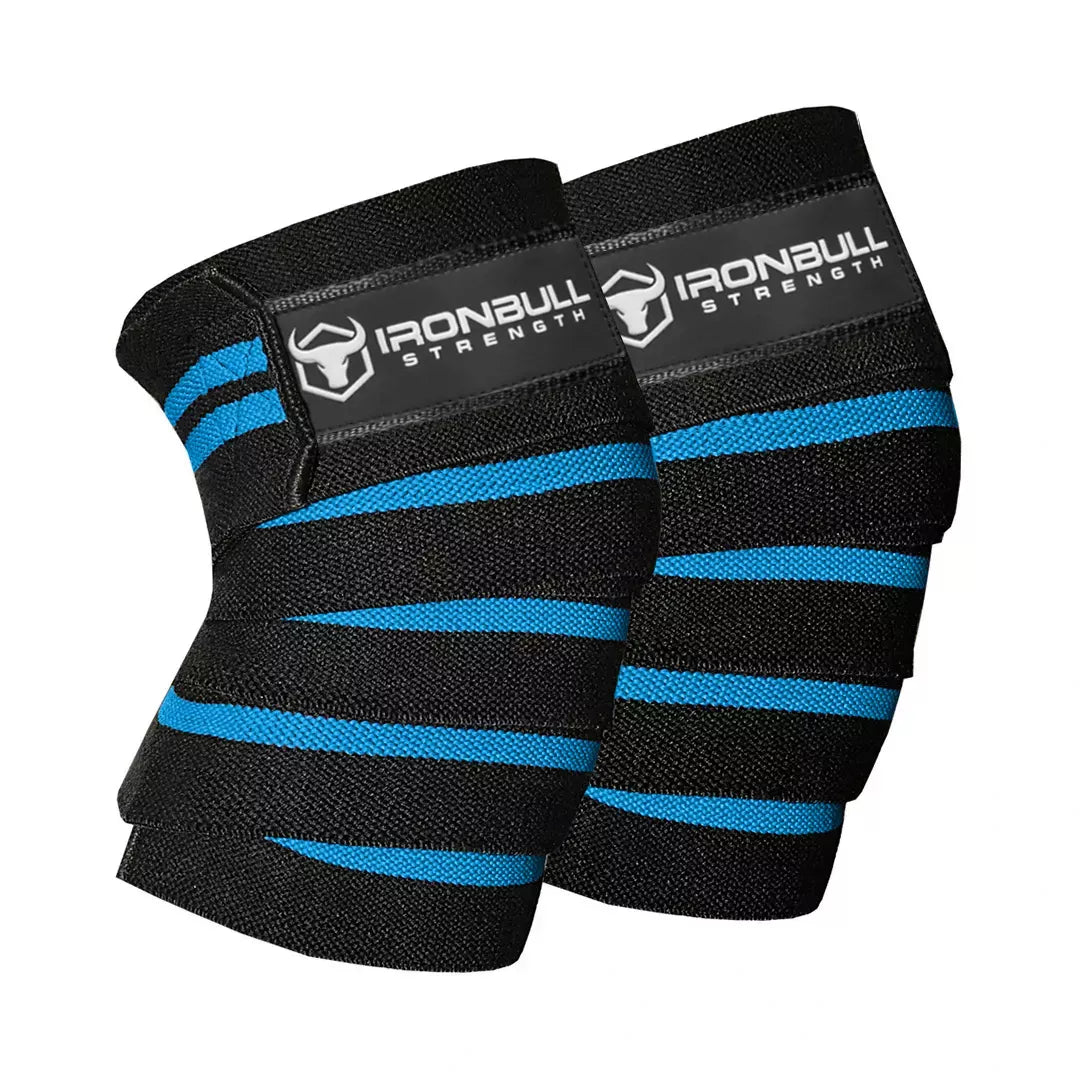
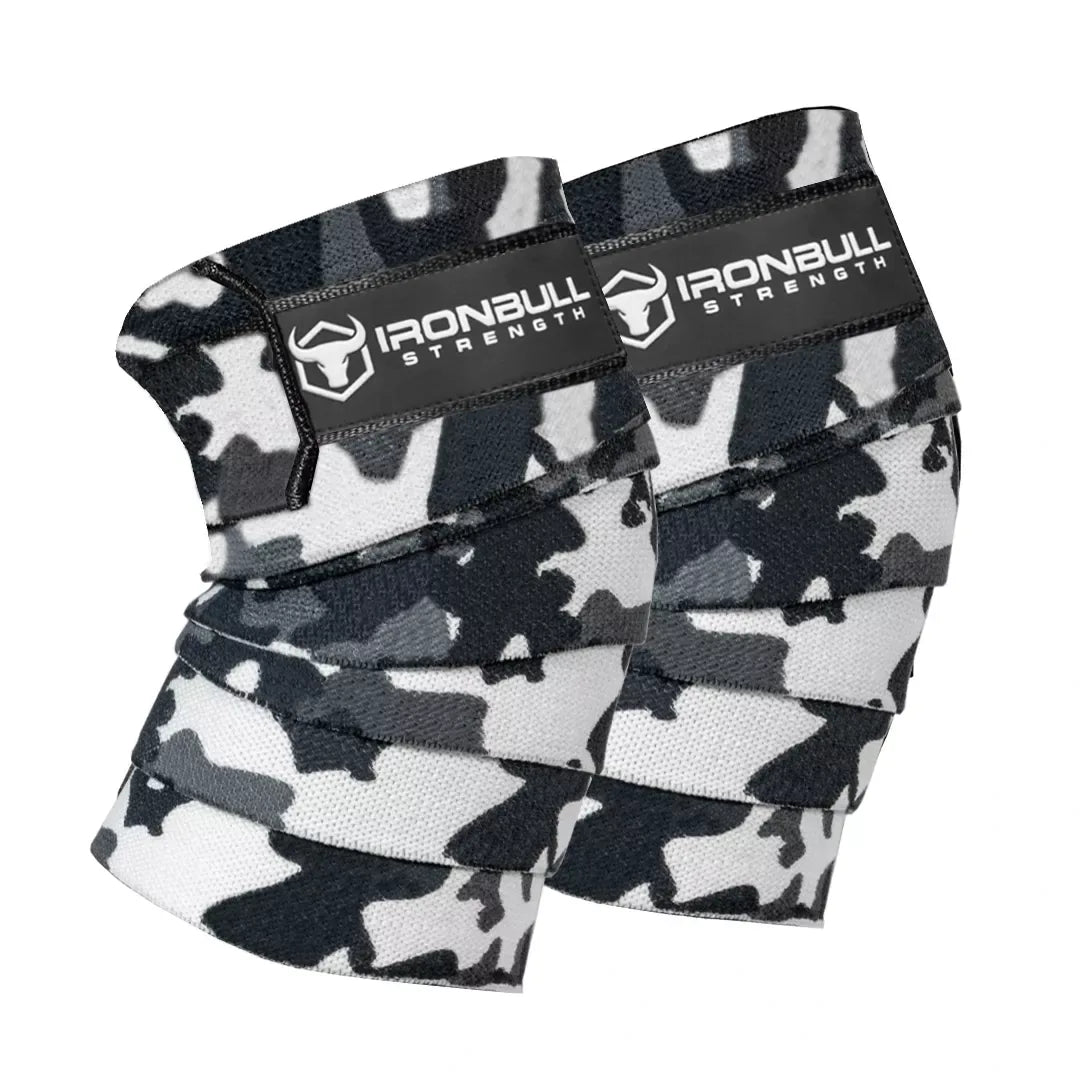
Knee Wraps

Knee Wraps for Heavy Squats and Powerlifting

Iron Bull knee wraps are built for lifters who need maximum compression and rebound on their heaviest sets. Whether you're competing on the platform or testing a squat PR in the gym, our knee wraps deliver the tension and support that knee sleeves simply can't match at maximum effort.

Product type
Product type
Color
Color

Filters

Product type
Product type
Color
Color
1 Result

Knee Wraps for Squats — Maximum Compression, Maximum Rebound

When the weight gets heavy enough that passive compression isn't enough, knee wraps are the answer. Unlike knee sleeves that slide on and provide consistent all-session support, knee wraps are wound tightly around the joint before each maximal squat attempt — storing elastic energy in the wrap material that releases on the ascent, giving you a measurable rebound out of the bottom of the squat.

This is why competitive powerlifters use wraps on the platform and not just sleeves. The mechanical advantage is real, it's legal in equipped and classic equipped divisions, and it can make the difference between making and missing a heavy attempt. Iron Bull knee wraps are built for exactly this purpose — maximum tension, consistent wrap from set to set, and construction that holds up through a full competition cycle.

What Do Knee Wraps Do for Squats?

Knee wraps do two things for your squat that sleeves cannot match at maximum effort. First, they compress the joint tightly enough to provide active support — keeping the kneecap tracking correctly under very heavy loads. Second, and more importantly for competitive lifters, they store elastic energy as the wrap compresses at the bottom of the squat and release it on the ascent. This gives you a mechanical rebound — a physical push out of the hole — that is legal under competition rules and measurably improves performance on maximal attempts.

Knee Wraps vs Knee Sleeves for Squats

Most lifters who squat should be wearing knee sleeves, not knee wraps. Here is the honest distinction:

Use knee sleeves for all regular training — every squat session, every heavy leg day, every conditioning workout. Sleeves provide warmth, compression, and proprioception all session long without restricting movement or requiring rewrapping between sets. They are the right tool for 95% of training sessions.

Use knee wraps when you are testing absolute maximum strength, competing in an equipped or classic equipped powerlifting division, or deliberately training with competition-specific gear in the final weeks before a meet. Wraps come off between sets. They are not all-session support gear and should not be used as a substitute for sleeves in general training.

Many competitive powerlifters own and use both — knee sleeves for every training session and wraps for competition day and peak testing weeks.

How Much Do Knee Wraps Add to Your Squat?

The honest answer depends on wrapping technique, tightness, and the individual lifter — but experienced powerlifters consistently report an additional 10 to 30 kilograms on a max squat attempt with properly wound knee wraps compared to sleeves alone. The rebound comes from elastic energy stored as the wrap compresses at the bottom position and releases on the ascent. The tighter and more even the wrap, the more energy released on the way up. This is why wrapping technique matters as much as the wrap itself.

Do Knee Wraps Help with Knee Pain When Squatting?

Knee wraps provide significant compression that some lifters find helpful for patellar stability on heavy squats. However, knee wraps are not a medical device and will not address the underlying cause of knee pain. If you are experiencing persistent knee pain during squatting, the first step is identifying whether it is a technique issue, a mobility restriction, or a structural problem — wraps will not fix any of these.

For daily training support and knee pain management during lifting, knee sleeves are the better tool. They provide consistent warmth and compression all session long without the restrictive tension of a wrap, and are more appropriate for general use than wraps.

How to Put On Knee Wraps Correctly

Wrapping technique directly affects how much support and rebound you get. Here is the correct approach:

Start the wrap just below the kneecap and wrap upward in a spiral or figure-eight pattern with consistent, even tension, finishing above the patella. The wrap should feel very tight — uncomfortable to walk in. That is correct. You are not wearing them for comfort, you are wearing them for a single heavy set.

Wrap immediately before your working set, not 10 minutes beforehand. Remove them between sets — wearing wrapped knees for extended periods restricts blood flow and provides no additional benefit. Practice your wrapping technique consistently in training before competition so the feel and the rebound are completely familiar on meet day.

Not ready for wraps yet? Start with our 7mm knee sleeves — they provide meaningful compression and rebound on heavy squats without the technique requirement of wraps, and are legal in all raw powerlifting divisions.

Frequently asked questions

What do knee wraps do for squats?
Knee wraps compress the knee joint tightly and store elastic energy at the bottom of the squat that releases on the ascent, providing a measurable mechanical rebound. This gives competitive lifters a legal performance advantage on maximal squat attempts that passive knee sleeves cannot match at the same intensity.

How much do knee wraps add to your squat?
Experienced powerlifters consistently report an additional 10 to 30 kilograms on a max squat attempt with properly wound knee wraps compared to sleeves alone. The exact amount depends on wrapping technique, tightness, and the individual lifter. Consistent wrapping practice in training is essential to maximizing the benefit on competition day.

What is the difference between knee wraps and knee sleeves?
Knee sleeves slide on and provide passive compression and warmth throughout a full training session. Knee wraps are wound tightly before each heavy set and provide significantly more aggressive mechanical rebound. Use knee sleeves for all regular training. Use knee wraps for maximum-effort competition squats or peak testing weeks only — they are removed between sets and are not all-session support gear.

Are knee wraps allowed in powerlifting competitions?
Knee wraps are legal in classic equipped and equipped divisions under IPF, USPA, USAPL, IPL, and most major federations. They are not permitted in raw powerlifting divisions — only knee sleeves are allowed in raw. Always check your specific federation's current rulebook and equipment list for the division you compete in before meet day.

How do you put on knee wraps correctly?
Start just below the kneecap and wrap upward in a spiral or figure-eight pattern with consistent, even tension, finishing above the patella. The wrap should feel very tight. Wrap immediately before your working set and remove between sets. Practice your technique consistently in training before competition so the feel and rebound are completely familiar on meet day.

Should I use knee wraps or knee sleeves for squats?
For most lifters, knee sleeves are the right choice for all regular squat training — they provide warmth, compression, and proprioceptive feedback all session long. Knee wraps are for maximum-effort attempts, competition, and peak testing weeks. If you compete in raw powerlifting, only sleeves are permitted. If you compete in classic equipped or equipped divisions, wraps are standard equipment for your heaviest attempts.

Do knee wraps help with knee pain when squatting?
Knee wraps provide significant compression that some lifters find helpful for patellar stability on heavy sets. However, they are not a medical device and will not address the underlying cause of knee pain. For daily training support and knee pain management, knee sleeves are a better tool — they provide consistent compression and warmth without the restrictive tension of a wrap.