Lever Belt Guide — What It Is, How It Works & Which to Buy
A lever belt is the standard choice for powerlifting and serious strength training. It delivers consistent, locked-in compression every single set — faster to put on than a prong belt, tighter than anything velcro can achieve, and built to last years of heavy training. If you squat and deadlift heavy regularly, a lever belt is the most reliable tool you can add to your training.
This guide covers everything you need to know: what a lever belt is, how it differs from prong belts, how to choose between 10mm and 13mm, how to size it correctly, and which Iron Bull lever belt is right for your training. Want the science behind why belts work in the first place? See our full breakdown of what a lifting belt actually does.
What Is a Lever Belt?
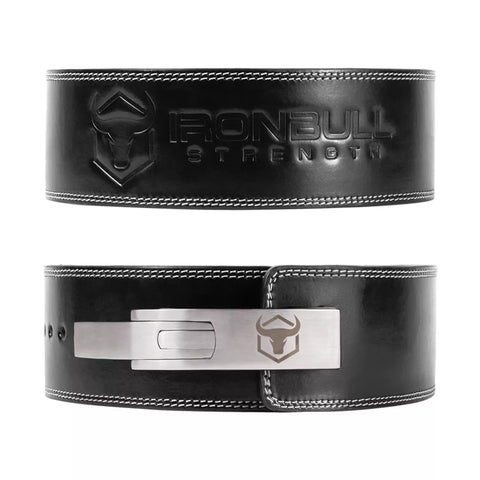
A lever belt uses a metal lever mechanism instead of a buckle or prong. You set the lever once — using a screwdriver to position it on the belt holes at your exact waist measurement — and from that point every single set is identically tight. Lock it shut with a flip of the lever before your set. Release it just as quickly when you're done.
This is why powerlifters and strength athletes prefer lever belts over prong belts for heavy training. A prong belt requires threading and re-tightening each set, which introduces variation. A lever belt eliminates that variable entirely. Once set, every session starts with exactly the same compression — the same brace, the same support, the same feel under the bar.
Lever Belt vs Prong Belt — Which Should You Choose?
Both types provide meaningful intra-abdominal support when worn correctly. The difference is in consistency and ease of use.
Choose a lever belt if: you squat and deadlift heavy regularly, you want the same tightness on every set without adjustment, you compete in powerlifting or plan to, or you simply want the fastest on/off in your training.
Choose a prong belt if: you prefer to adjust tightness between exercises or rep ranges, you're newer to using a belt and still figuring out your preferred tightness, or you want the flexibility of a single belt across very different training styles in the same session.
Most serious lifters who use belts consistently end up on a lever belt. The consistency it provides under maximal loads is hard to replicate with a prong. For a deeper side-by-side, see our full lever belt vs. prong belt comparison.
10mm vs 13mm Lever Belt — What's the Difference?
Thickness determines stiffness. A thicker belt generates more intra-abdominal pressure when braced correctly because it provides more material to push against.
10mm lever belt: The most popular choice. Excellent support, breaks in faster, more comfortable across a wider range of movements, and IPF approved for competition. This is the right starting point for the vast majority of lifters — from intermediate to competitive powerlifters. Our 10mm lever belts come in 3-inch and 4-inch widths.
13mm lever belt: The maximum thickness allowed under IPF regulations. Noticeably stiffer than 10mm, takes longer to break in, and can dig into the hips on low-bar squat positioning until fully broken in. The right choice for experienced powerlifters who have already used a 10mm belt extensively and want the absolute maximum rigidity available. Not necessary for most lifters — if you're unsure, 10mm is the correct answer. See our full 10mm vs 13mm comparison for more detail.
3-Inch vs 4-Inch Width — Which Fits Better?
Belt width affects how much of your core the belt covers and how it interacts with your hip position at the bottom of a squat.
3-inch (76mm): Suits lifters with shorter torsos, female lifters, or anyone who finds 4-inch belts digging into their hips during squats. More comfortable for Olympic lifting positions and dynamic movements.
4-inch (100mm): The powerlifting standard. Covers more of the lower back and core, providing more surface area for bracing. The most common choice for back squats and deadlifts. Most competitive powerlifters use 4-inch belts.
How to Size a Lever Belt
Measure your waist circumference at your belly button — not at your natural waist, not at your hips. Use the clothes you train in. This is the measurement that determines your belt size, and it's the only measurement that matters.
Match that number to our size chart. When in doubt between two sizes, go with the smaller size — lever belts should fit tightly. A belt that sits loose is not providing compression, and compression is the entire point.
Once you have your belt, set the lever at the hole where you want it to sit when locked. The lever should require noticeable effort to close when set correctly — if it snaps shut easily with no resistance, move it one hole tighter.
How to Adjust a Lever Belt
Use a flathead screwdriver to move the lever position along the belt holes. Each hole represents one adjustment increment. Set it at the hole where the belt provides the compression you want when locked, then leave it there. Day-to-day use requires no tools — just flip the lever open and shut.
You'll only need to re-adjust with a screwdriver if your waist size changes significantly, or if you decide you want tighter or looser compression after training in it for a few sessions.
How to Wear a Lever Belt Correctly
Position the belt at your belly button or just above your hip bones. The belt should sit where your torso bends when you hinge — not on your lower back, not up near your ribs.
Before each set: close the lever, take a full breath into your belly pushing your core outward in all directions into the belt, brace hard, and lift. The belt should feel like it's being pushed outward when you brace. If you don't feel that resistance, the belt is too loose — adjust the lever one hole tighter. Not sure why bracing against a belt matters in the first place? Read the science behind belt training.
Exhale at the top of the lift or between reps. Never exhale at the bottom of a squat or at the sticking point of a deadlift — you'll lose the intra-abdominal pressure exactly when you need it most.
Are Lever Belts IPF Approved?
Yes — IPF regulations permit lever belts in all raw and equipped divisions. Both our 10mm and 13mm lever belts are built to meet IPF equipment specifications, making them legal for CPU, USAPL, PA, and all IPF-affiliated federation competition.
Always verify against your federation's current approved equipment list before competition day — equipment lists are updated periodically and specific brand approvals can change.
Iron Bull Lever Belt Lineup
We offer four lever belt options to cover every lifter from intermediate competitor to elite powerlifter:
-
Pro 10mm 3" Lever Belt — IPF Approved — The entry point for competition-ready lever belts. 10mm thickness, 3-inch width, ideal for lifters with shorter torsos or those who prefer less hip interference at the bottom of a squat. $135.
-
Pro 10mm 4" Lever Belt — IPF Approved — The most popular option in our lineup. 10mm thickness, 4-inch width, the powerlifting standard for back squats and deadlifts. $135.
-
Premium 10mm 4" Lever Belt — IPF Approved — Upgraded construction with premium leather and a wider size range including XS and 4XL. For lifters who want the best-fitting 10mm available. $175.
-
Pro 13mm 4" Lever Belt — IPF Approved — Maximum stiffness for experienced lifters who want the absolute top end of support. 13mm, 4-inch, IPF approved. $145.
-
Premium 13mm 4" Lever Belt — IPF Approved — Premium leather construction in 13mm. The competition belt for serious powerlifters. $185.
Browse all Iron Bull lifting belts to compare models side by side, or go straight to our lever belt collection.
Frequently Asked Questions
What is a lever belt?
A lever belt uses a metal lever mechanism to lock in a fixed tightness. You set it once with a screwdriver, and every set is identically tight — locked with a flip of the lever, released just as quickly.
How tight should a lever belt be?
Set the lever at a hole where closing it requires noticeable effort and the belt feels very tight when locked. You should feel significant compression when you brace against it. If the lever snaps shut with no resistance, move it one hole tighter.
Should I get a 10mm or 13mm lever belt?
10mm for almost everyone. It provides excellent support, breaks in faster, and is IPF approved. 13mm is for experienced powerlifters who have already used a 10mm belt extensively and want maximum rigidity. If you're unsure, 10mm is the right answer.
How do I adjust a lever belt?
Use a flathead screwdriver to move the lever position along the belt holes. Set it at the hole that gives you the compression you want when locked. Day-to-day use requires no tools.
What size lever belt should I get?
Measure your waist circumference at the belly button with the clothes you train in. Match that number to our size chart. When between sizes, go smaller — lever belts should fit tightly.
Are lever belts IPF approved?
Yes. Our 10mm and 13mm lever belts are built to IPF specifications and are legal for CPU, USAPL, PA, and all IPF-affiliated federation competition. Verify against your federation's current approved list before meet day.
What is the difference between a 3-inch and 4-inch lever belt?
4-inch is the powerlifting standard — more coverage of the lower back and core. 3-inch suits lifters with shorter torsos or anyone who finds 4-inch belts digging into their hips at the bottom of a squat.